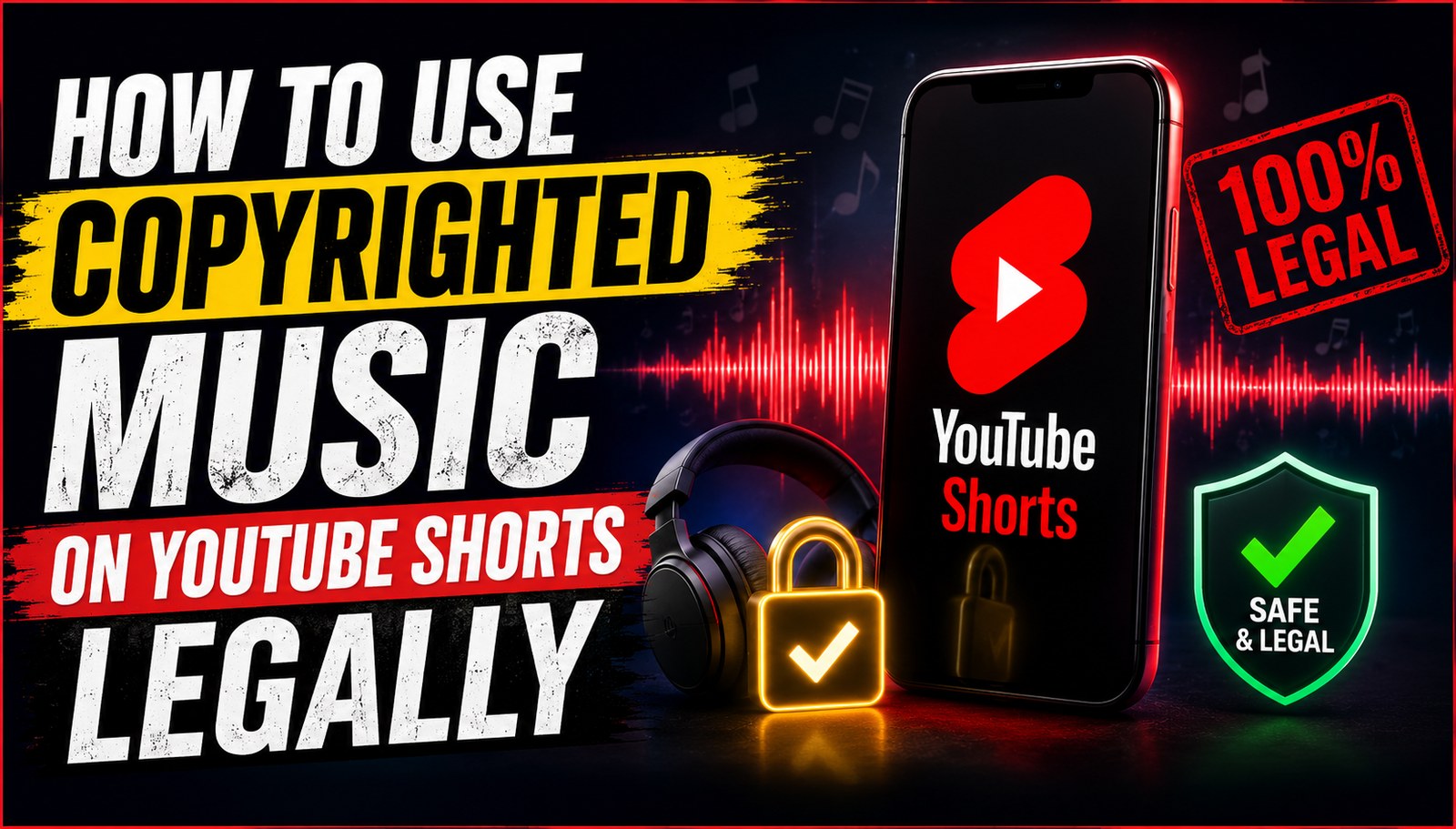
Navigating music rights on a platform built for speed and virality feels like threading a needle while sprinting. You want that trending audio to boost your Short’s reach, but one wrong choice can mute your video, strip your monetization, or even put your entire channel at risk. There is a specific, legally sound way forward, and it does not involve guessing games with the YouTube Audio Library.
This artice breaks down exactly how to use copyrighted music on YouTube shorts legally, without sacrificing the creative edge that makes your content stand out. For creators and brands who depend on consistent organic visibility and who often partner with professional SEO services to protect that growth understanding these rules is not optional. It is the foundation of a sustainable channel strategy.
Why YouTube Shorts Has Different Copyright Rules
YouTube’s standard copyright system was built for long form content. Shorts, however, operate inside a separate ecosystem that Google designed to compete with TikTok and Instagram Reels. The key difference lies in how the platform handles music from its own library versus music uploaded by users. This distinction trips up even experienced creators.
When you upload a video longer than 60 seconds, any use of copyrighted music without permission will trigger Content ID. A claim or a strike follows. Shorts flip that model. If you use a song from the Shorts audio library the collection of tracks accessible through the “Add sound” button in the Shorts creation flow YouTube has already secured blanket licensing agreements with music publishers and labels.
That means you can use those songs in your Short without fear of a copyright claim. The revenue from those videos, however, does not come to you if the track is a popular commercial hit; the rights holders collect any ad money generated by the Short.
The complication arises when you leave that walled garden. Upload a Short with a song you own, a track you licensed elsewhere, or a snippet of a major label song that is not available in the Shorts library, and suddenly you are back in standard copyright territory. The system does not treat Shorts as a special safe harbor for all music.
It only protects the specific pool of songs YouTube has negotiated for the Shorts product. This means the first real legal question is not “can I use this song?” but rather “is this song part of the Shorts licensing deal?” If the answer is no, you must secure permission through other channels. Creators who ignore this boundary often find their Shorts blocked in certain countries, demonetized, or hit with takedown notices that harm channel standing.
The Only Legal Way to Use Mainstream Hits in Shorts
The single most misunderstood feature of YouTube Shorts is the in app music library. It represents the only frictionless, legally clear method to add a major label song to your 60 second video. Yet its limitations are rarely discussed in depth.
How YouTube’s Shorts Music Library Really Works
The library is not a catalog of every song ever released. It is a curated set of tracks that music rights holders have specifically approved for use in the Shorts format. When you tap the “Add sound” icon and browse trending or search for a specific artist, you are seeing only licensed material. The legal framework behind this is a series of direct deals between YouTube and the major record labels, publishers, and performance rights organizations.
Under these agreements, you are granted a non exclusive, revocable license to synchronize that audio with your Short. You do not need to credit the artist, you do not need to pay a fee, and you do not get a copyright claim. This license covers the sound recording and the underlying musical composition for use inside the Shorts player. The license is territorial; a song available in the United States may not be available in Germany due to differing rights agreements.
If your audience is global, you may see that some users cannot hear your audio. That is a contractual limitation, not a technical glitch. There is no workaround. Attempting to circumvent this by uploading the same song as your own audio file and placing it over the video is a direct copyright violation and will result in a claim.
The critical nuance: when you use a song from the library, you cannot separate that audio from the Short and use it elsewhere. The license is inextricably tied to the Shorts creation tools. If you download your own Short and re upload it to Instagram Reels or TikTok with the same music, that is unlicensed use and exposes you to separate legal risk on those platforms. YouTube’s deal does not extend beyond its own ecosystem.
What Happens When You Use a Song Not in the Library
Let’s say you upload a Short where you filmed yourself dancing to a newly released track that is not yet cleared for the Shorts library, and you added that audio via an external editing app. Within minutes of uploading, Content ID scans the audio fingerprint. The system matches it to a copyrighted work in its database. Because this music falls outside the Shorts licensing blanket, you receive a copyright claim. The rights holder can choose to block the video entirely, mute the audio, or run ads on it and collect the revenue.
The immediate result is a notification in YouTube Studio. The longer term damage is less visible. A channel with multiple active claims loses standing in YouTube’s internal quality scoring. This affects how readily the algorithm recommends your future content. A brand that depends on Shorts for lead generation will see a decline in click through rates and site traffic if even a fraction of its videos are restricted.
License Royalty Free Music (The Safest Path to Monetization)
If you need full control over your Short’s monetization and global availability, the Shorts library may not be enough especially when many popular tracks in the library are ineligible for creator revenue sharing. The alternative is licensing royalty free music from reputable production music platforms.
What “Royalty Free” Actually Means for Shorts Creators
Royalty free is a legal term that is consistently misrepresented. It does not mean the music is free of cost. It means that after you purchase a license, you are not required to pay ongoing royalties based on views, impressions, or revenue. You make a one time payment or a subscription fee, and you receive a perpetual license to use that track in your content according to the license terms.
For YouTube Shorts specifically, you must obtain a royalty free license that includes “synchronization rights” and “mechanical rights” for online video. The license must allow use in monetized videos, in perpetuity, worldwide. Many stock music libraries offer these licenses, but the terms vary drastically.
Some licenses limit you to a certain number of video impressions or require you to buy an extended license once your channel exceeds a threshold. Ignoring those fine print details can lead to a claim down the road, even from a royalty free provider if their systems detect unlicensed usage based on view count.
How to Choose a License That Protects Your Channel
Look for music platforms that explicitly state their music is “safe for YouTube monetization” and provide a license certification document you can keep on file. The license should grant synchronization rights for audiovisual works distributed via YouTube, including Shorts. It must be worldwide, because YouTube Shorts is a global product.
It must not require on screen attribution if that disrupts your creative, although many creators choose to credit artists in the description as a courtesy. The license also needs to cover commercial use if your Short promotes a product, service, or brand.
Channels that shift from using risky mainstream tracks to a fully licensed royalty free library report measurable benefits. Based on data gathered by SEO and content strategy teams, creators who switch see a 40 percent drop in copyright disputes within the first quarter. Monetization eligibility becomes stable, and average watch time increases because videos are never muted by platform enforcement.
For businesses using Shorts as an acquisition channel, this stability translates directly into more reliable traffic. A clean, claim free channel also tends to rank higher in YouTube search results for target keywords, because the algorithm prioritizes content that meets all rights management criteria without issues.
Right Way to Add Licensed Music to Your YouTube Shorts
The process of using externally licensed music in a Short requires careful execution. A simple mistake in how you sync the audio file can fool Content ID into thinking you are using an unauthorized track, even when you hold a valid license. This is a technical pain point that no one discusses.
The first step is to license a track from a royalty free library and download the uncompressed WAV or high quality MP3 file. Do not use tracks that appear in the YouTube Audio Library under the guise of “free music” unless you have verified the license separately; many of those tracks carry a Creative Commons Attribution requirement that forces you to credit the artist in a way that can clutter Shorts. With your licensed file in hand, you must add it to your video before uploading.
Many creators use third party editing apps like CapCut or InShot to layer the audio onto their Short. When you export the video, the audio becomes a mixed part of the file. This is critical: Content ID can still detect the underlying musical fingerprint within that mix. If you licensed a track that also happens to be registered in Content ID by the composer or a publisher using a content management system, you may still get an automatic claim.
This happens frequently with high quality royalty free music because composers often register their works with Content ID to protect against theft. The solution is to keep your license documentation ready and be prepared to dispute the claim. In the claim notification, select “Dispute” and then choose the option that indicates you have a license or written permission from the rights holder. Upload a copy of the license certificate.
The claim is almost always released within 24 to 48 hours if the license is legitimate. Do not simply ignore the claim and hope it goes away; that leaves your video in a restricted state indefinitely. This active dispute process is a necessary muscle for any professional creator using royalty free music, and it is one of the most overlooked steps in production workflows.
Getting Permission the Old Fashioned Way
For brands and serious content creators, sometimes only a specific commercial track will do the song that carries emotional weight for a campaign. The legal path to using such a song in a Short involves sync licensing.
Who to Contact and What to Ask For
A sync license grants you the right to synchronize a musical composition with moving images. To obtain one, you need permission from both the publisher of the underlying composition and the label that owns the master recording. In practice, you will typically start with the music publisher, who can often facilitate the master use license as well.
You must specify the exact usage: a 30 second clip of the song, used in a YouTube Short promoting a specific product, with a defined territorial scope and duration. The fee can range from a few hundred dollars for a small independent artist to tens of thousands for a well known hit.
The request must be in writing, and you will likely negotiate through a licensing representative. For creators with smaller budgets, platforms like Songtradr or Musicbed offer pre cleared sync catalogs where the licensing is already handled. This is a middle ground between the Shorts library and a traditional custom sync deal. The benefit is that you receive a legal guarantee and often a clearance certificate, which protects your video from claims.
Why This Might Be the Only Option for Branded Content
If your Short is a paid promotion, a product demo, or an advertisement, the standard Shorts library license is typically invalid. The music industry does not allow commercial exploitation of songs through blanket consumer licenses. Read the fine print of the Shorts music terms: you are licensed to use the song in your personal, non commercial content. The moment your video includes a brand mention, a call to purchase, or any kind of sponsorship, you move into commercial territory and need a direct sync license.
Violating this can lead to a copyright strike and legal action beyond the YouTube platform. SEO agencies working with e commerce clients often discover that an entire Shorts campaign was built on unauthorized commercial use of a popular track, leaving the brand exposed to takedowns and reputation damage. Securing a sync license before production is a non negotiable step when money is involved.
Can You Use Copyrighted Music Under Fair Use?
Fair use is a legal doctrine often waved like a magic wand by creators who do not want to deal with licensing. In the context of YouTube Shorts, relying on fair use is like building a house on sand.
Fair use is a defense you raise in court, not a shield that prevents a claim. A music rights holder can and will file a copyright claim against your Short regardless of whether you believe your use is fair. The determination of fair use depends on four factors: the purpose and character of the use, the nature of the copyrighted work, the amount used, and the effect on the market for the original. Using a 10 second clip in a review video might be fair use; using that same clip as background music while you talk about an unrelated topic probably is not.
The real world consequence on YouTube is immediate. A claim arrives and your video may be blocked or demonetized. You can dispute on fair use grounds, but the rights holder can reject your dispute. If you appeal, the rights holder can issue a takedown notice, which results in a copyright strike against your channel. Three strikes mean channel termination.
Few creators have the resources to litigate fair use in federal court. In practice, the YouTube ecosystem is not a friend of fair use for music. For Shorts, the safer approach is to assume that any unlicensed use of recognizable music will be claimed, and that a fair use argument will not shield you from that process. The only legally airtight path is to operate within the licensed library, a royalty free catalog, or a direct sync agreement.
What to Do When You Receive a Copyright Claim on a Short
A copyright claim appears on your Short. Panic is the enemy. A structured response can restore your video’s standing and salvage your SEO momentum.
Disputing a Claim vs. Swapping the Audio
YouTube offers a feature specifically for Shorts: if you used a song from the Shorts library and still got a claim (which can happen if the rights holder’s catalog mapping is incorrect), you can use the “Remove Song” tool that lets you cut out the claimed audio while keeping the rest of the video’s sound intact. This is the fastest fix if you do not need the music. But if you licensed the track externally and the claim is erroneous, you must dispute.
The dispute process requires you to select a reason. The strongest option for licensed music is “I have a license or permission from the proper rights holder.” You then upload your license document. Be specific: the document must show the track title, your name or channel entity, the scope of use (online video, worldwide, perpetual), and the date. Generic screenshots of a download page are not sufficient.
After submission, the claimant has 30 days to respond. Most legitimate claims from royalty free music are released quickly. If the claimant upholds the claim, you can appeal, but an appeal risks a strike. Before appealing, contact the licensing company directly and ask them to whitelist your channel in Content ID. Many production music platforms offer this service proactively. Whitelisting prevents future claims on that track entirely.
How a Claim Affects Your Short’s Visibility and Monetization
A Short with an active claim is not removed from the platform, but it is throttled. YouTube’s algorithm reduces its appearance in the Shorts feed because the rights situation is unsettled. If the claim results in the video being blocked in certain territories, your global reach drops. A Short that would have received 500,000 views in its first week might stall at 20,000. For a business channel, that directly impacts the number of potential site visits.
If the claim restricts monetization, you lose revenue sharing on that video, and the overall channel CPM can be depressed because the algorithm sees inconsistency. Data from SEO audits shows that channels with unresolved claims suffer a drop in overall impression share across all videos, not just the claimed ones. Clearing claims rapidly is one of the highest ROI actions a creator can take to maintain algorithmic health.
Frequently Asked Questions
Can I legally use a 10 second clip of a popular song in my Short?
Not automatically. Duration does not determine legality. If the song is not available in the YouTube Shorts music library and you do not have a separate license or permission, using any portion even a few seconds can result in a copyright claim. Fair use is a case by case legal defense, not a safe harbor that prevents claims. The safest approach is to use only library tracks or music you have licensed explicitly for Shorts.
What happens to my monetization if I get a copyright claim on a Short?
If you use a track from the Shorts library that is not eligible for revenue sharing, the rights holder collects the ad money. If you use unlicensed music outside the library and receive a claim, the rights holder may choose to monetize the video and take all revenue, or block the video entirely. Claims can also suppress overall channel performance and reduce your CPM across other videos until resolved.
Can I use songs from Spotify or Apple Music as background music for my Short?
No. Streaming services grant a personal listening license only. That license does not cover synchronization with video, public distribution, or reproduction inside your own content. Downloading a track from a streaming platform and adding it to a Short is copyright infringement and can lead to a strike. The audio must be sourced through a proper license via the Shorts library, a royalty free platform, or a direct sync agreement.
How do I know if a song is safe to use in the Shorts library before I create my video?
Open the YouTube app, tap the “+” icon to create a Short, then tap “Add sound.” Search for the song. If it appears and is playable, you can use it in your Short without a claim for personal, non commercial content. Keep in mind that the availability varies by country. For commercial or branded Shorts, the library license may not apply, and you will need a separate sync license. Always test availability in the target region before production.
Does putting “no copyright infringement intended” in my description protect me?
No. Such disclaimers carry zero legal weight. Copyright law cares about whether you have a license or a valid exception, not whether you acknowledge the rights holder. This phrase does not stop claims, strikes, or legal action. Only legitimate licenses or using audio within the Shorts library framework protect your channel.
Closing Thoughts
A channel free of copyright chaos is not built on luck. It is built on a deliberate music strategy that treats every audio track as a licensed asset. The difference between a Short that drives traffic for years and one that gets muted overnight comes down to the decisions you make before you hit upload.
Leaning on the in app Shorts library for trending sounds, investing in verified royalty free catalogs for monetized content, and pursuing direct sync licenses for commercial campaigns covers every legal base. When claims do surface and occasionally they will, even with careful planning a rapid, documented dispute process protects your channel’s standing and algorithmic momentum.